GRATIFICATION: INSTANT AND DELAYED
We are well aware of Instant Gratification these days, particularly concerning the younger generations, but it is something that applies to us all, no matter what age we are.
There are wonderful things about Instant Gratification which satisfy our desires, giving us immediate relief or pleasure: a hot soak in the bath after a day in the garden, that welcome favourite beverage at the end of a long day, spending time working on our favourite hobby, feeling great after exercising, taking a short walk or dancing, etc. These are part of maintaining our important self-care.
It’s the types of Instant Gratification such as impulse buying, excessive fast food, binge-watching shows, scrolling through social media etc. that can lead to frustration, making poor choices, procrastination, anxiety and ultimately lower long-term fulfillment.
As US author Frank Sonnenberg puts it: “We’ve become so addicted to instant gratification that we’re blind to the impact it has on our lives.”
Those quick shots of ‘feel-goods’ are little dopamine hits that our body/minds love. The problem is when we opt for these it can stop us from achieving our longer-term goals and aspirations.
Often the guilt sets in. We berate ourselves for not having the discipline to look to the longer end result that we are aiming for. It can be hard to patiently wait for a later reward when we can achieve some satisfaction right away.
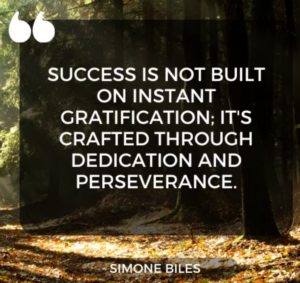
Below is a comment from Simone Biles, the most decorated gymnast in history. She is right when she says that success does indeed come from dedication and perseverance. But how do we stick to those ideals when our society throws us so many daily temptations?
Striking a balance between Instant and Delayed Gratification, using both in moderation, is essential.
First, we need to understand how our minds work.
If you have done workshops with me, you will have heard the line: “We Become What We Think About”. Wise words from Earl Nightingale’s recording “The Strangest Secret” in the 1950s. Here’s the YouTube link if you wish to hear more – https://www.youtube.com/watch?v=qOY_2nVozLA
In the 1960s, Dr. Joseph Murphy maintained that visualisations, affirmations and gratitude weren’t just ‘feel good’ practices. They were powerful ways to program our ‘operating system’: our Subconscious.
Dr. Murphy said “Your conscious mind controls less than 5% of your life. The subconscious mind controls up to 95%.” Over the decades Neuroscience has proven him right.
Those of you who have done workshops with me know this, but we all need reminding (hence these newsletters!).
Today we are presented with advertisements, streaming, social media – all designed to steal our focus and attention. (Great reading – Johann Hari’s “Stolen Focus: Why You Can’t Pay Attention – and How to Think Deeply Again”.)
- Practise Gratitude daily; this keeps our mindset positive, reducing stress and increasing happiness. Gratitude is a most effective way to turn negative thinking into positive thoughts.
- Affirmations are powerful. What we think and say becomes our belief system. Our mind will attract whatever we believe, hence we create our own reality by our thoughts and words.
- Visualisations mean we see our desired end results and the benefits that come from our goals being achieved. Remember our minds cannot tell the difference between a real or an imagined picture. Creative visualisation is a very powerful process.
Taking a few minutes each day, sitting quietly, relaxing, and speaking and seeing those things that we wish to achieve, means we are working at a very powerful level.
From Emile Coue (well over 100 years ago) “When the imagination (the subconscious) and the will (the conscious) are in conflict, the imagination invariably wins.”
All of these techniques help us to achieve those results we look for in life, ensuring our Delayed Gratification is satisfied. And they are very powerful tools to give us the strength and resolve to combat those frequent ‘feel goods’ that bombard us every day.
Happy month. Love and Laughter,